
What Makes Deep Draw Metal Forming Different?
Turning flat sheet metal into precise, durable components that perform under real-world conditions is a highly technical, no-nonsense art. As a global metal stamping manufacturer, we’ve been mastering this art since 1968. It’s with deep draw metal forming that we’ve produced complex shapes with depth, strength, and tight tolerances for companies in the automotive industry, HVAC, plumbing, and beyond.
Here’s how deep drawing metal differs from traditional stamping to create unique three-dimensional parts without tearing or wrinkling.
How Does Deep Draw Metal Forming Work?
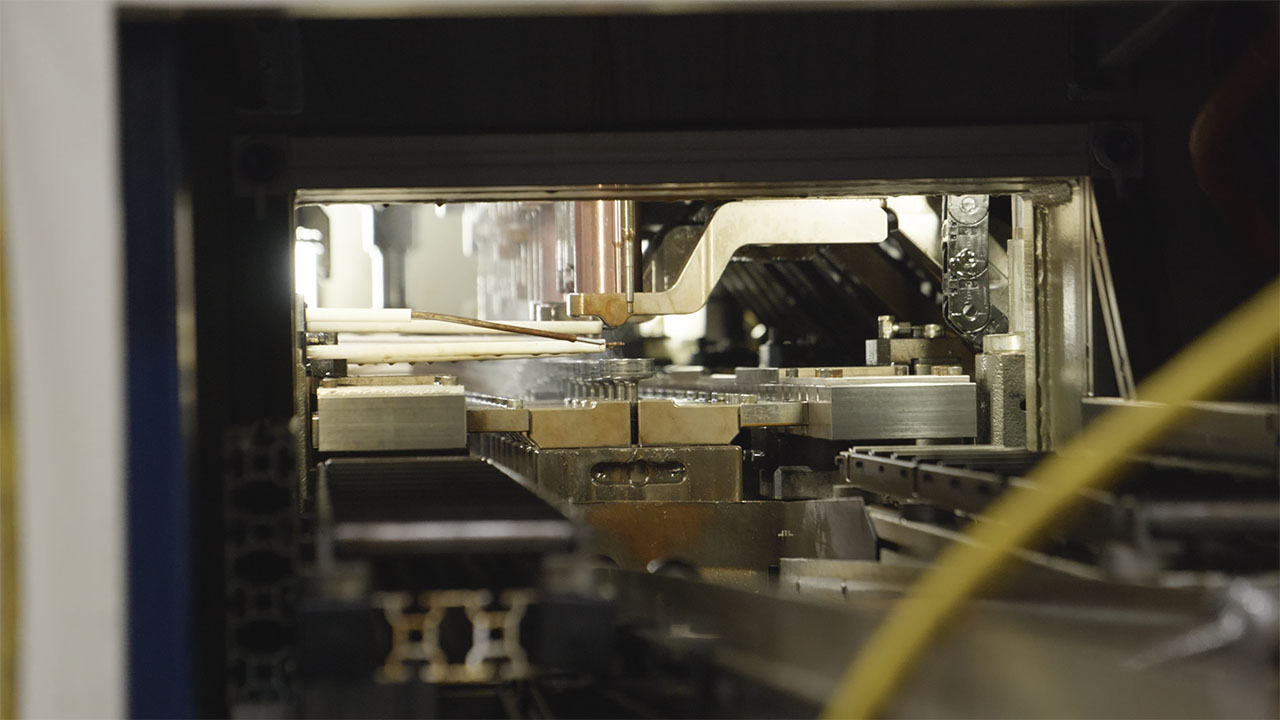
At its core, deep draw forming begins with a flat blank of sheet metal. The blank is placed over a die cavity and held in place by a blank holder. A punch then forces the metal into the die, reshaping it into a cup, canister, housing, or other deep profile. Because the depth of the part exceeds its diameter, the material must flow carefully into the die without thinning excessively.
The process often involves several stages. After the initial draw, the part may go through redraw operations to increase depth or refine dimensions. Each stage must account for material behavior, friction, lubrication, and tool design. This is why deep draw metal stamping requires a high level of engineering expertise and precision tooling.
When executed properly, this type of metal forming produces seamless, high-strength components with consistent wall thickness and minimal secondary operations.
How Do Other Metal Forming Methods Compare?
Not all metal forming processes are designed to create deep, hollow shapes. Progressive die stamping and transfer press stamping are highly efficient for flat or moderately formed parts, though machines of this nature can be tuned for deeper draws if needed. With that said, when a component requires substantial depth or a closed-end geometry, deep draw stamping is the preferred solution.
Deep draw forming stands apart thanks to:
- Significant material flow rather than simple bending or cutting
- Multiple draw stages to achieve final depth
- Close control of thinning, wrinkling, and tearing
- Tooling engineered specifically for deep drawn metal parts
Deep drawing metal is less about cutting shapes from sheet stock and more about reshaping the material in a controlled way. This makes it ideal for producing items like motor housings, battery enclosures, pump components, compressor shells, and structural automotive parts.
Materials & Engineering Considerations
Material selection plays a critical role in successful deep drawn metal stampings. Commonly used materials include stainless steel, aluminum, copper, brass, titanium, bronze, and certain low carbon steels. Each one of these deep draw forming materials responds differently to stretching and compression, which affects tooling design and process parameters.
Factors that influence performance include:
- Ductility and elongation properties
- Thickness and grain direction
- Surface finish and lubrication
- Final strength and corrosion resistance requirements
Engineering support early in the design phase helps ensure manufacturability. Adjustments to corner radii, wall height, and material thickness can significantly improve results. Because we specialize in commercial metal forming here at Trans-Matic, we’re no stranger to customer collaboration and take pride in our ability to refine designs for efficient production and long-term reliability.
Serving Industries with Unique Demands
Deep draw metal forming supports a wide range of industries, each with distinct performance standards and regulatory requirements. Traditional automotive and EV manufacturers depend on deep drawn parts for structural components, motor housings, and battery-related applications where precision and durability are critical.
In alternative energy systems, these deep drawn stampings are used in enclosures and components that must withstand environmental exposure. HVAC and plumbing applications often require custom metal formed parts capable of handling pressure, temperature changes, and corrosion. Whatever the need, this manufacturing method creates quality products for an extensive list of applications, all with minimal scrap.
Get a Deep Draw Forming Quote
For those seeking reliable, high-performance components, deep draw metal forming offers more than just shape. As a global metal stamping company, we’ve used it to deliver structural integrity, repeatability, and scalability across industries that demand precision and consistency. Ready to get a project started with Trans-Matic? Fill out our online contact form today to schedule a consultation.
